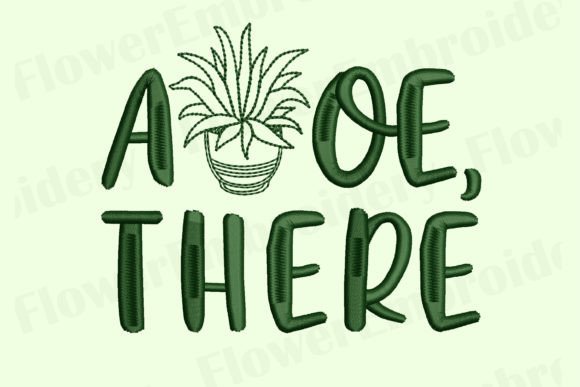
Aloe There: A Craft Fair Designer’s Review
If you’re preparing your booth for a weekend craft fair, you know that choosing the right design is half the battle. Your products need to catch eyes from across the aisle, feel good in the hand, and be practical to produce in batches. Today, I’m putting the Aloe There machine embroidery design under the lens from that exact perspective: as a professional embroidery designer deciding whether to turn this file into a lineup of handmade products for my booth.
First Impression: Modern & Minimal with a Friendly Twist
The title Aloe There immediately sets a tone. This isn’t just a botanical illustration; it’s a playful, welcoming greeting. The design leans into a modern, minimalist aesthetic—clean lines, a single focal plant, and that clever text. It feels perfectly suited for today’s market, which loves a blend of farmhouse charm and clean, decorative style. For a craft fair seller, this is promising. It’s not overly rustic or aggressively cute; it sits in a sweet spot that appeals to a broad audience looking for something fresh and premium for their home or wardrobe.
Where This Design Stands Out on the Booth Table
Imagine your display: tote bags, aprons, tea towels, caps, small pouches, pillow covers, and maybe some framed art. The Aloe There embroidery design has specific strengths on certain products.
On tote bags and market bags, it becomes an instant lifestyle statement. Placed centrally or on a pocket, the clean design elevates a simple bag into a desirable, giftable handmade product. For tea towel embroidery and aprons, it’s a winner. The aloe motif is inherently linked to kitchen and home decor, making these practical items feel special and decorative.
As an embroidered patch, it’s versatile—it could be applied to denim, sweaters, or backpacks, offering a smaller, lower-priced item that attracts younger buyers or those looking for a quick custom addition. On pillow covers, it creates a serene, botanical accent that pairs easily with other decor. For caps, the design’s simplicity is key, but careful placement on the curved surface is necessary.
Practical Production & Selling Points
Turning a digital embroidery file into a profitable craft fair product requires a practical eye.
Visual Clarity & Batch Production
This design appears to be easily understood at a glance—a single plant with text. That’s crucial for fast customer engagement at a busy fair. It likely works beautifully as a medium-sized focal piece. I would test it both as a larger statement on a tote and a smaller accent on a pouch to find the sweet spot. For batch production, a clean, less overly detailed design like this is often more repeatable. You can efficiently run multiples on towel sets or bag batches without excessive thread changes or long stitch times.
The Photograph Factor for Online & Offline Sales
Whether for your Etsy listings or for customers browsing your booth, how a design photographs is vital. The minimalist nature of the Aloe There design should translate well. Contrast is key. On light fabrics, it will pop beautifully. On dark fabric, you must ensure the thread colors chosen—likely greens and a clean white or cream for the text—provide enough contrast to maintain that crisp, premium feel. Always test on scrap fabric first.
Careful Use Notes for Consistent Quality
As with any embroidery file, a few careful-use notes will save you from production headaches. Check for any dense stitch areas, particularly in the aloe plant itself, which could affect how it sits on thinner fabrics like tea towels. The small lettering in “Aloe There” demands attention. You need the right stabilizer and hoop technique to keep those tiny stitches sharp and readable, especially on textured towels or curved cap surfaces. A design can lose clarity if shrunk too small, so confirm the minimum practical hoop size for this file before committing to petite items like patches.
Boosting Booth Appeal & Customer Engagement
A great design doesn’t just decorate a product; it enhances your entire booth’s appeal and perceived value.
The Aloe There machine embroidery design adds a layer of handmade quality and thoughtful design. It helps build brand consistency if you have a line of botanical or modern home goods. In a display, a cohesive set of aloe-embroidered towels, a tote, and a pillow creates a strong, attractive vignette that draws customers in. This design encourages engagement—people will read the playful text, touch the embroidery, and imagine it in their space. That interaction is where sales begin.
The Designer’s Final Checklist Before Production
Before you load this file and start producing for your craft fair or small shop, here’s my real-world checklist. Create at least one real mockup on the actual product fabric you intend to use, be it cotton canvas for bags or linen for towels. Compare how it looks on different fabric colors. Inspect the stitch density and review the spacing of elements; a well-digitized file should stitch out smoothly without jumps or overly thick areas. Confirm the thread colors suggested and adjust for your specific fabric palette. Most importantly, if you plan to sell the finished products commercially, verify the licensing terms of the digital embroidery file. Only proceed with production once you know you’re clear to sell your handmade products.
In the world of craft fair products, the Aloe There design stands as a strong contender. It carries a modern, friendly mood that translates well across popular product types, from tote bag designs to kitchen linens. With attention to the practical details of embroidery application—stabilizer, contrast, and scale—this Single Flowers Plants design can become a reliable, attractive part of your handmade product lineup, helping your booth not just look good, but sell well.